
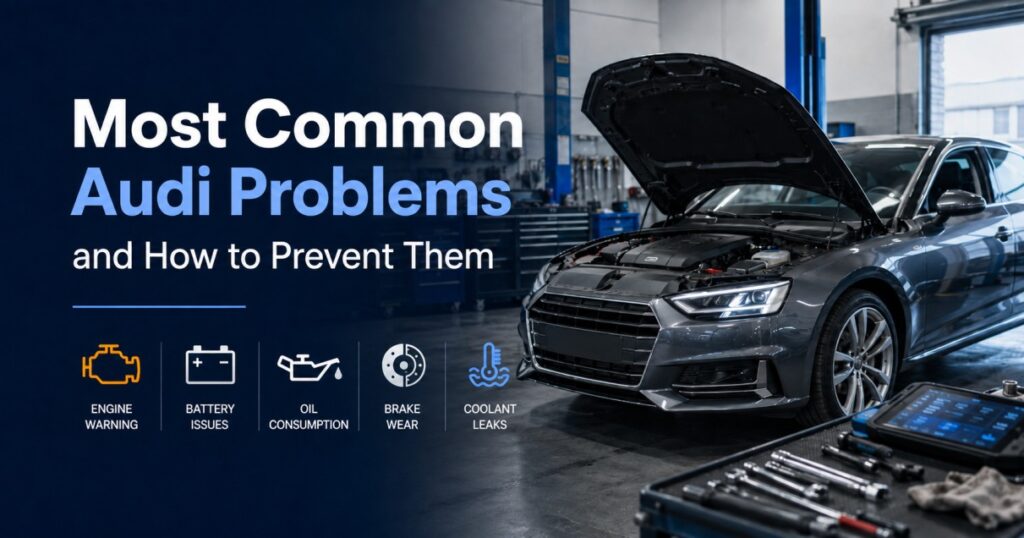
Audi vehicles are known for comfort, performance, and advanced European engineering. At European Prestige Car Care, Audi owners can get expert help from mechanics in Somerton for servicing, diagnostics, repairs, and a roadworthy certificate when required. Regular care helps protect your Audi from common faults and keeps it safe, reliable, and enjoyable to drive.
Audi models are built with precision, but they still need proper maintenance. Small issues can turn into expensive repairs when they are ignored for too long. Many Audi problems can be prevented through regular servicing, early diagnosis, and using the right parts, fluids, and repair methods.
This guide explains the most common Audi problems Australian drivers may face and how to reduce the risk of them happening.
Excessive Oil Consumption
Some Audi models are known to use more engine oil than expected, especially older turbocharged models. Oil is essential because it protects moving engine parts, reduces friction, and helps control engine temperature.
Low oil levels can cause engine wear, poor performance, overheating, and serious internal damage. Drivers may notice an oil warning light, burning oil smell, smoke from the exhaust, or the need to top up oil between services.
Prevention starts with regular oil checks. Audi owners should check oil levels often and use oil that matches the manufacturer’s specifications. Skipping oil changes can increase sludge build-up and place extra stress on the engine.
A professional inspection can also identify leaks, worn seals, or internal engine issues before they become major repairs.
Carbon Build-Up
Many Audi engines use direct injection technology. This system improves fuel efficiency and power, but it can also lead to carbon build-up on intake valves over time.
Carbon deposits can restrict airflow and affect engine performance. Common signs include rough idling, reduced acceleration, poor fuel economy, hesitation, and engine misfires.
Prevention involves regular servicing and early diagnostics when performance changes appear. Using quality fuel and keeping up with scheduled maintenance can help reduce build-up. Some engines may need professional carbon cleaning if deposits become heavy.
Ignoring carbon build-up can make the engine work harder and reduce the smooth driving experience Audi owners expect.
DSG Transmission Problems
Audi vehicles with dual-clutch transmissions are designed for quick, smooth gear changes. These systems perform well when maintained correctly, but they can develop faults if servicing is delayed.
Common signs of transmission trouble include jerky gear changes, delayed engagement, slipping, unusual noises, warning lights, or shuddering during take-off.
Transmission fluid plays an important role in protecting gearbox components. Old or contaminated fluid can cause wear and poor performance.
Preventing DSG problems means following the recommended service schedule and checking any gear change issues early. A diagnostic scan can identify faults before they become expensive transmission failures.
Cooling System Issues
Audi engines operate at high temperatures and rely on a healthy cooling system. The cooling system includes the radiator, thermostat, water pump, coolant hoses, fans, and coolant fluid.
Problems may appear as overheating, coolant leaks, steam from the engine bay, a rising temperature gauge, or a low coolant warning. Overheating should never be ignored because it can damage the engine quickly.
Prevention includes regular coolant checks and replacing coolant at recommended intervals. Hoses, pumps, and seals should also be inspected during servicing.
A cooling system fault caught early is usually easier and cheaper to repair than engine damage caused by overheating.
Electrical Faults
Modern Audi vehicles include advanced electrical systems that control safety features, infotainment, lighting, sensors, engine management, and comfort functions.
Electrical faults can appear in many ways. Drivers may notice warning lights, battery drain, sensor errors, window faults, lighting problems, or issues with dashboard displays.
Audi electrical systems often need specialised diagnostic equipment. Guesswork can lead to unnecessary repairs and wasted money.
Prevention includes keeping the battery in good condition, repairing faults early, and completing diagnostic checks during servicing. A weak battery can trigger electrical issues, especially in vehicles with many electronic features.
Suspension Wear
Audi vehicles are designed to feel stable, smooth, and controlled. Suspension parts such as control arms, bushings, shocks, struts, and ball joints can wear over time.
Melbourne roads, speed bumps, potholes, and daily driving can increase suspension wear. Common signs include clunking noises, uneven tyre wear, steering vibration, poor handling, and reduced ride comfort.
Prevention includes regular suspension inspections and wheel alignment checks. Replacing worn parts early helps protect tyres, steering components, and overall driving safety.
A well-maintained suspension system keeps the vehicle comfortable and responsive.
Brake Wear
Audi braking systems are designed to deliver strong stopping power. Brake pads, discs, sensors, and fluid all need regular inspection to keep the system working correctly.
Drivers may notice squealing, grinding, vibration, longer stopping distance, or a brake warning light. These signs should be checked quickly.
Prevention includes routine brake checks and replacing pads before they wear too far. Brake fluid should also be replaced according to the service schedule because old fluid can reduce braking performance.
Safe braking is essential for every vehicle, especially a performance-focused European car.
Air Conditioning Problems
A working air conditioning system is important in Australian weather. Audi air conditioning issues can be caused by low refrigerant, leaks, compressor faults, blocked filters, or electrical problems.
Signs include warm air from the vents, weak airflow, unusual smells, strange noises, or inconsistent cooling. A regular car air conditioning service can help maintain comfort and prevent bigger system failures.
Prevention includes checking the system before summer, replacing cabin filters, and repairing leaks early. Leaving small air conditioning faults untreated can cause more expensive component damage.
Battery and Starting Issues
Audi vehicles rely heavily on electrical systems, which can place extra demand on the battery. Short trips, cold starts, and vehicle age can reduce battery life.
Signs of battery trouble include slow starting, clicking noises, dim lights, warning messages, or electrical faults. A weak battery can also affect sensors and onboard systems.
Prevention includes battery testing during servicing and replacing old batteries before they fail. Charging system checks can also confirm whether the alternator and related components are working correctly.
A reliable battery helps prevent unexpected breakdowns.
Oil Leaks
Oil leaks can occur around gaskets, seals, valve covers, sump areas, and turbo components. Even a small leak should be checked because it can worsen over time.
Drivers may notice oil spots under the car, burning smells, smoke, or low oil warnings. Oil leaks can also damage nearby rubber components and create fire risks if oil drips onto hot parts.
Prevention includes regular inspections and fixing leaks early. Clean oil and correct service intervals can reduce stress on seals and gaskets.
Turbocharger Problems
Many Audi models use turbocharged engines for strong performance and efficiency. Turbochargers operate under high heat and pressure, so they need clean oil and proper maintenance.
Signs of turbo trouble include loss of power, whining noises, smoke, poor acceleration, or engine warning lights.
Prevention includes regular oil changes, using the correct oil, allowing the engine to warm up properly, and avoiding hard driving when the engine is cold.
A healthy turbo system helps maintain strong performance and fuel efficiency.
Fuel System Issues
Audi fuel systems are designed to deliver precise fuel pressure and flow. Problems can occur with fuel pumps, injectors, filters, or sensors.
Symptoms may include hard starting, rough idle, poor acceleration, misfires, or reduced fuel economy.
Prevention includes scheduled servicing, using quality fuel, and addressing performance issues early. Diagnostic testing can help identify fuel system faults before they affect the engine more seriously.
Timing Chain and Belt Concerns
Some Audi engines use timing chains, while others may use timing belts. These parts control the movement of internal engine components. If they fail, major engine damage can occur.
Signs of timing issues may include rattling noises, poor running, engine warning lights, or starting problems.
Prevention includes following manufacturer recommendations and having timing components inspected during servicing. Early replacement can help avoid severe engine failure.
Protect Your Audi Before Problems Grow
Regular Audi servicing helps detect early signs of wear, leaks, electrical faults, and transmission problems before they turn into costly repairs. A trained European vehicle specialist can inspect your vehicle properly and recommend the right solution.
Call 1800 001 105 today to book your Audi inspection or service.
How Regular Servicing Prevents Audi Problems
Regular servicing is the best way to reduce the risk of major Audi repairs. A proper service includes oil and filter replacement, fluid checks, brake inspections, tyre checks, diagnostic scanning, suspension checks, and road testing.
Servicing also gives technicians the chance to identify early warning signs. This may include small leaks, worn brake pads, weak batteries, ageing hoses, or stored fault codes.
Preventative maintenance is usually more affordable than emergency repairs. It also helps maintain fuel efficiency, safety, performance, and resale value.
Choosing the Right Workshop for Audi Repairs
Audi vehicles need technicians who understand European engineering. These vehicles often require specialised diagnostic tools, correct service procedures, and quality replacement parts.
A workshop with Audi experience can identify common model-specific issues faster and complete repairs more accurately. This helps reduce unnecessary work and keeps the vehicle closer to manufacturer standards.
Choosing the right team also gives drivers clearer advice about service timing, repair priorities, and long-term maintenance.
Audi vehicles offer excellent comfort, technology, and performance, but they need regular care to stay reliable. Common problems such as oil consumption, carbon build-up, DSG faults, cooling system failures, electrical issues, brake wear, and suspension problems can often be prevented with scheduled maintenance.
Early inspections and proper servicing help protect the engine, transmission, safety systems, and overall driving experience. Audi owners who maintain their vehicle correctly can enjoy smoother performance and fewer unexpected repair costs.
For expert Audi servicing, diagnostics, and repairs, contact European Prestige Car Care today. Call 1800 001 105 now to book your next service and keep your Audi performing at its best.
; ?>)
; ?>)
; ?>)
; ?>)
; ?>)
; ?>)
; ?>)
; ?>)