
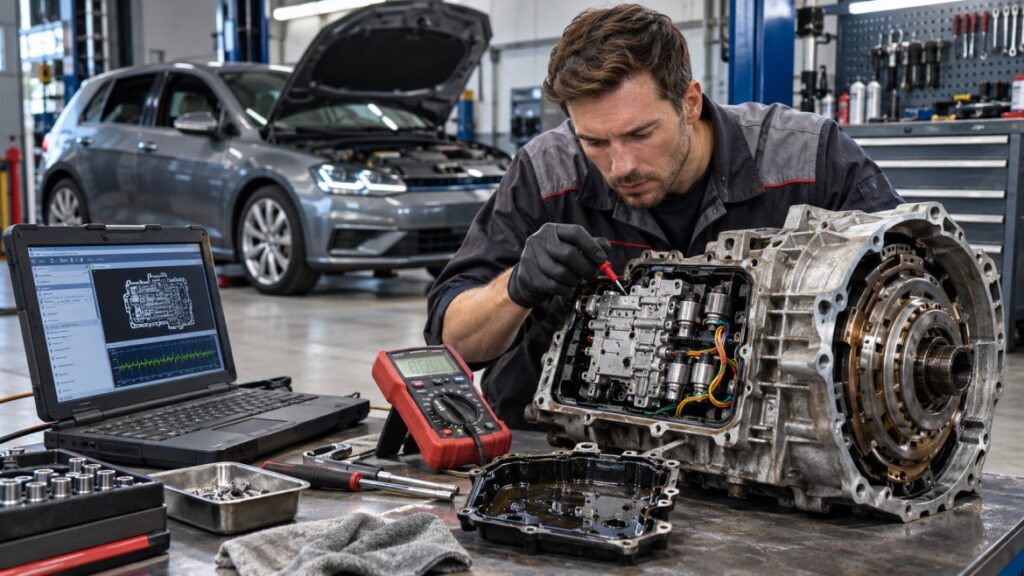
A Volkswagen DSG gearbox is designed to provide quick, smooth gear changes, but problems with its mechatronic unit can make everyday driving difficult. At European Prestige Car Care, our experienced mechanics in Somerton team provides diagnostics and repairs for European vehicles. A professional volkswagen service can help identify developing transmission problems, particularly when drivers notice unusual gear changes, warning lights or delays when accelerating.
Mechatronic unit failure is one of the more expensive problems a Volkswagen owner may encounter. However, not every transmission fault requires a complete gearbox replacement. Understanding the warning signs, possible causes and available repair options can help drivers make informed decisions before spending money on major repairs.
This guide explains how a VW DSG mechatronic unit works, seven symptoms worth watching for, the differences between repair and replacement, and the potential costs for Australian motorists.
What Is a VW DSG Mechatronic Unit?
The mechatronic unit is an important component inside a Volkswagen Direct-Shift Gearbox (DSG). It combines electronic controls with a hydraulic system to manage gear selection and clutch operation.
Unlike a traditional automatic transmission, a DSG gearbox uses two clutches to manage different sets of gears. This allows the transmission to prepare the next gear while the vehicle is moving, helping deliver faster changes and efficient performance.
The mechatronic unit coordinates these movements by monitoring information such as engine speed, vehicle speed, gear position and driver input.
Its main responsibilities include:
- Controlling when gears change.
- Managing clutch engagement and disengagement.
- Regulating hydraulic pressure.
- Receiving information from transmission sensors.
- Communicating with other vehicle control systems.
- Supporting smooth acceleration and gear selection.
When the unit develops an electrical, hydraulic or mechanical fault, it may struggle to control the gearbox correctly.
Some Volkswagen Golf, Polo, Passat, Tiguan and Caddy variants use DSG transmissions, although the gearbox design varies between models and production years.
The symptoms and repair requirements can differ depending on whether the vehicle uses a six-speed wet-clutch, seven-speed dry-clutch or another DSG configuration.
7 Warning Signs of VW DSG Mechatronic Unit Failure
Recognising unusual gearbox behaviour early can help prevent an unexpected breakdown. The following seven symptoms may indicate a mechatronic issue, although they can also result from clutch wear, electrical faults or other transmission problems.
1. Jerky or Rough Gear Changes
A noticeable jerk when changing gears is one of the symptoms that can occur with DSG transmission problems.
Drivers may feel the vehicle lurch forward when moving from first to second gear or experience a sudden jolt during acceleration.
These changes can become particularly noticeable in slow-moving traffic, where the gearbox frequently switches between lower gears.
A faulty mechatronic unit may struggle to regulate the hydraulic pressure needed for smooth clutch engagement. However, worn clutches and incorrect transmission adaptations can produce similar symptoms.
If the vehicle regularly changes gears roughly, a diagnostic inspection can help determine the actual cause.
2. Delayed Response When Selecting Drive or Reverse
A healthy DSG transmission should engage the selected gear without an excessive delay.
When a mechatronic unit develops a fault, there may be a noticeable pause after shifting into Drive or Reverse.
For example, a driver may select reverse while parking, but the vehicle does not respond immediately. The gear may eventually engage with an unexpected jolt.
This behaviour can result from problems with hydraulic pressure, internal control valves, clutch operation or electronic communication.
Repeated delays should not be ignored, especially when they become more frequent.
A qualified european vehicle specialist can examine the transmission and identify whether the issue involves the mechatronic system or another gearbox component.
3. Gearbox Warning Lights on the Dashboard
Modern Volkswagen vehicles use electronic monitoring systems to detect irregular transmission operation.
When the system identifies a problem, it may display a gearbox warning message or illuminate a warning symbol.
Depending on the model, drivers might notice:
- A transmission malfunction message.
- A flashing gear position indicator.
- A warning relating to gearbox operation.
- Restricted transmission performance.
- A message advising the driver to seek workshop assistance.
A warning light does not automatically confirm mechatronic failure.
The transmission control module may record fault codes relating to pressure regulation, temperature, sensors, electrical communication or clutch operation.
Specialist diagnostic equipment is needed to interpret these codes alongside the vehicle’s actual behaviour.
Continuing to drive without investigating an active gearbox warning may increase the risk of further problems.
4. Vehicle Stuck in One Gear or Limp Mode
Some Volkswagen vehicles enter a reduced-performance operating mode when the transmission control system detects a significant fault.
Commonly called limp mode, this protective function may limit available gears or restrict vehicle performance.
Drivers may experience reduced acceleration, difficulty changing gears or a transmission that remains in a particular gear.
In certain situations, the problem may disappear after restarting the engine, only to return later.
An intermittent fault still requires attention. Problems involving hydraulic pressure or electronic control can become more serious over time.
If the vehicle loses normal gear operation or cannot be driven safely, stop in a safe location and arrange professional assistance rather than attempting to continue the journey.
5. Shuddering or Vibration During Acceleration
A Volkswagen that shudders when moving away from a standstill may be experiencing a DSG-related problem.
The sensation can feel like repeated small vibrations through the vehicle, particularly during gentle acceleration or stop-start driving.
Mechatronic faults can interfere with clutch engagement, producing uneven power delivery.
However, shuddering may also be caused by worn clutch packs, engine mounts or dual-mass flywheel problems.
This distinction is important because replacing the mechatronic unit will not solve an unrelated mechanical fault.
A proper diagnosis should examine the transmission’s electronic controls and mechanical components before deciding on repairs.
6. Transmission Slipping or Unexpected Gear Changes
Transmission slipping can occur when the engine speed increases without a matching increase in vehicle speed.
The vehicle may feel as though it has temporarily lost power, particularly while accelerating or travelling uphill.
Some drivers also notice unexpected downshifts or difficulty maintaining the selected gear.
Mechatronic pressure-control problems can affect how the clutches operate, but excessive clutch wear can create similar symptoms.
A transmission specialist may need to analyse live gearbox data, clutch behaviour and stored fault codes to identify the source.
Driving with severe slipping can cause additional heat and wear. If the vehicle struggles to transfer power reliably, it should be inspected before further use.
7. Complete Loss of Drive or Reverse Gear
One of the most serious DSG symptoms is the sudden inability to move the vehicle after selecting a gear.
The engine may start and run normally, but the transmission fails to engage Drive or Reverse.
This can happen when a major hydraulic or electronic fault prevents the gearbox from operating its clutches or gear-selection system.
Loss of drive can also result from internal transmission damage, electrical failures or other mechanical problems.
Drivers should avoid repeatedly pressing the accelerator to force the vehicle to move.
If the transmission cannot engage properly, arrange recovery to a workshop for inspection.
A complete loss of drive requires prompt attention because the vehicle may be unsafe to operate.
Why Do Volkswagen DSG Mechatronic Units Fail?
Mechatronic units contain electronic and hydraulic components that must work together under changing temperatures and operating conditions.
Over time, individual components may develop faults.
Hydraulic Pressure Problems
The mechatronic system relies on controlled hydraulic pressure to operate the transmission.
Faults involving the pressure accumulator, hydraulic pump or internal seals can interfere with normal gear changes.
Certain seven-speed DSG designs, including the DQ200, are associated with particular pressure-related faults.
Electronic Control Failures
The electronic control module processes information from multiple sensors and communicates with the vehicle’s other systems.
Internal electronic faults, damaged wiring or poor electrical connections may prevent the unit from operating correctly.
Solenoid and Valve Problems
Solenoids help manage the movement of hydraulic fluid through the transmission’s control system.
A faulty solenoid or valve can cause incorrect pressure regulation, delayed engagement or irregular gear changes.
Heat and Transmission Fluid Issues
Some DSG systems rely on specified transmission fluid for lubrication, cooling and hydraulic operation.
Using incorrect fluid or neglecting required servicing can contribute to transmission problems.
However, not all DSG gearboxes have identical fluid requirements. The correct maintenance procedure depends on the gearbox type and manufacturer’s instructions.
Age and Component Wear
Like other vehicle components, electronic and mechanical transmission parts can deteriorate with age and use.
High kilometres do not automatically mean the mechatronic unit will fail. Driving conditions, previous maintenance, transmission design and individual component condition all influence reliability.
How Much Does a VW Mechatronic Unit Replacement Cost in Australia?
The cost of repairing or replacing a VW mechatronic unit varies considerably.
There is no single price that applies to every Volkswagen because different models use different DSG systems, and the severity of the fault can change the amount of work required.
As a broad Australian guide, specialist mechatronic repairs or rebuilds may cost approximately $1,900 to $4,250, while replacement with a new or remanufactured unit may cost around $3,750 to $6,400, including GST. These are indicative industry estimates rather than fixed workshop prices.
The final amount may be lower or higher depending on the vehicle and the repair required.
Factors That Affect Replacement Costs
Volkswagen model and gearbox type: A Golf with a particular seven-speed DSG may require different components from a Tiguan or Passat equipped with another transmission.
Extent of the damage: A limited hydraulic or electronic problem may be repairable, while extensive internal failure could require replacement.
New or reconditioned parts: New components generally cost more than compatible rebuilt units, although availability and warranty conditions vary.
Diagnostic labour: Accurate testing is essential before replacing expensive components. Complex intermittent faults can require additional investigation.
Programming and adaptation: Replacement units may need coding, software configuration or clutch adaptation procedures.
Additional mechanical repairs: If the clutch assembly, flywheel or other gearbox components are damaged, these repairs can increase the total bill.
A written quote should explain the diagnosed fault, recommended work, included parts and applicable warranty.
VW DSG Mechatronic Unit Repair vs Replacement
A faulty mechatronic unit does not always need to be replaced.
The most suitable repair depends on which component has failed, whether reliable replacement parts are available and the overall condition of the transmission.
Option 1: Repairing the Existing Unit
Some faults can be corrected by repairing individual components.
Depending on the DSG model, this may involve replacing certain seals, solenoids, hydraulic components or electronic parts.
A repair may be worthwhile when the damage is limited and the remaining unit is in suitable condition.
The work must be carried out using the correct procedures and compatible components.
Option 2: Installing a Reconditioned Unit
A reconditioned mechatronic unit has undergone specialist repair or rebuilding before being returned to service.
This can provide an alternative when the original unit is too damaged for an economical repair.
Compatibility is essential because different DSG transmissions require different control units and software configurations.
Owners should confirm the supplier’s warranty and any installation requirements.
Option 3: Replacing the Complete Mechatronic Unit
A complete replacement may be necessary when the existing unit has extensive electrical or hydraulic damage.
A new unit can involve a higher initial expense, particularly where genuine manufacturer parts are required.
Correct installation, coding and adaptation are important to ensure the replacement operates as intended.
Option 4: Repairing Other Transmission Components
Not every symptom attributed to the mechatronic unit originates inside it.
Worn clutch packs, damaged wiring, faulty sensors and internal gearbox problems may require different repairs.
Professional dsg transmission repairs in Melbourne services should begin with identifying the fault rather than assuming the most expensive component needs replacing.
How Is a Faulty DSG Mechatronic Unit Diagnosed?
A proper inspection involves more than connecting a basic fault-code reader.
The technician first needs to understand exactly when the problem occurs.
Some faults appear during cold starts, while others develop after the transmission reaches operating temperature.
A structured diagnosis may include examining stored fault codes, monitoring live gearbox information and checking electrical connections.
Where appropriate, technicians may also evaluate hydraulic pressure behaviour, clutch adaptations and transmission fluid condition.
A controlled road test can help reproduce symptoms, provided the vehicle remains safe to drive.
The results are then assessed together to determine whether the mechatronic unit, clutch assembly or another component requires attention.
This approach helps avoid replacing working components unnecessarily.
Can Regular Servicing Prevent DSG Mechatronic Failure?
Regular maintenance cannot guarantee that a mechatronic unit will never fail, but it can help identify developing problems and support transmission reliability.
Owners should follow the servicing schedule specified for their particular Volkswagen and gearbox.
Some wet-clutch DSG transmissions require periodic fluid and filter changes, while other designs have different maintenance requirements.
The correct transmission fluid specification is particularly important.
During routine servicing, technicians can also investigate unusual gearbox behaviour and advise whether further diagnostic testing is needed.
Owners seeking additional maintenance should remember that services such as audi service, bmw service, mercedes service and volvo service in Somerton involve different manufacturer requirements. A workshop experienced in European vehicles can select procedures and products appropriate to each model.
Other maintenance tasks, including a car air conditioning service, do not directly prevent DSG failure but contribute to keeping the vehicle’s broader systems in working order.
If a vehicle is being prepared for sale or registration, a roadworthy certificate inspection serves a different purpose from a detailed gearbox diagnosis. A roadworthy assessment does not guarantee the transmission is free from mechanical faults.
Should You Keep Driving With a Faulty DSG Mechatronic Unit?
The decision depends on the severity of the symptoms.
A minor intermittent hesitation may allow the vehicle to be assessed at a workshop, but it should not be ignored.
More serious problems require greater caution.
If the gearbox unexpectedly selects neutral, refuses to engage a gear, loses drive or behaves unpredictably, continued driving may be unsafe.
Stopping in a safe location and arranging vehicle recovery is generally the more appropriate option in these circumstances.
Delaying repairs may also create inconvenience if a developing fault eventually leaves the vehicle unable to move.
An early inspection gives the owner a clearer understanding of the problem and available repair choices.
Get Your Volkswagen DSG Transmission Checked in Somerton
Unusual gear changes, shuddering, dashboard warnings and delayed gear engagement can make a Volkswagen difficult to drive. These symptoms deserve attention, but they do not automatically mean the entire gearbox has failed.
Finding the actual cause is the most important step before choosing a repair or replacement.
European Prestige Car Care provides Volkswagen transmission diagnostics, servicing and mechanical repairs for drivers in Somerton, Campbellfield, Epping, Craigieburn, Broadmeadows and surrounding Melbourne suburbs.
Our team can inspect transmission-related problems, explain the findings and discuss suitable repair options before approved work begins.
Book a DSG transmission inspection today.
Visit our workshop at Factory 3, 144 Hume Highway, Somerton VIC 3062, or call 1800 001 105 to discuss your vehicle’s symptoms and arrange an appointment.
Frequently Asked Questions About VW DSG Mechatronic Problems
There is no fixed replacement interval for every mechatronic unit. Its lifespan depends on the gearbox design, component condition, vehicle use and maintenance history. Some units operate for many years without problems, while others develop faults earlier.
Yes, certain mechatronic faults can be repaired. Some hydraulic and electronic components may be replaceable, depending on the unit. A technician must first establish whether repairing the existing assembly is practical and reliable.
Repairing a suitable unit may cost less than installing a new assembly. However, the most economical option depends on the fault, available parts, warranty and condition of the transmission. A diagnosis and written quotation are essential.
Yes. Some problems may initially appear as hesitation, vibration or rough gear changes without an obvious dashboard warning. Fault codes may also be stored before a driver notices a warning message.
No. The mechatronic unit is one part of the transmission system. In many cases, it can be repaired or replaced separately. Complete gearbox replacement is generally considered when the internal transmission condition makes other repairs unsuitable.
The time required depends on the gearbox model, parts availability, installation complexity and programming requirements. Some repairs can be completed relatively quickly once parts are available, while specialist rebuilding or complex diagnosis may take longer.
A fault can return if the underlying cause was not correctly identified or if other transmission components are also damaged. Appropriate diagnosis, quality components, correct adaptation and suitable warranty coverage are important considerations.
; ?>)
; ?>)
; ?>)
; ?>)
; ?>)
; ?>)
; ?>)
; ?>)