
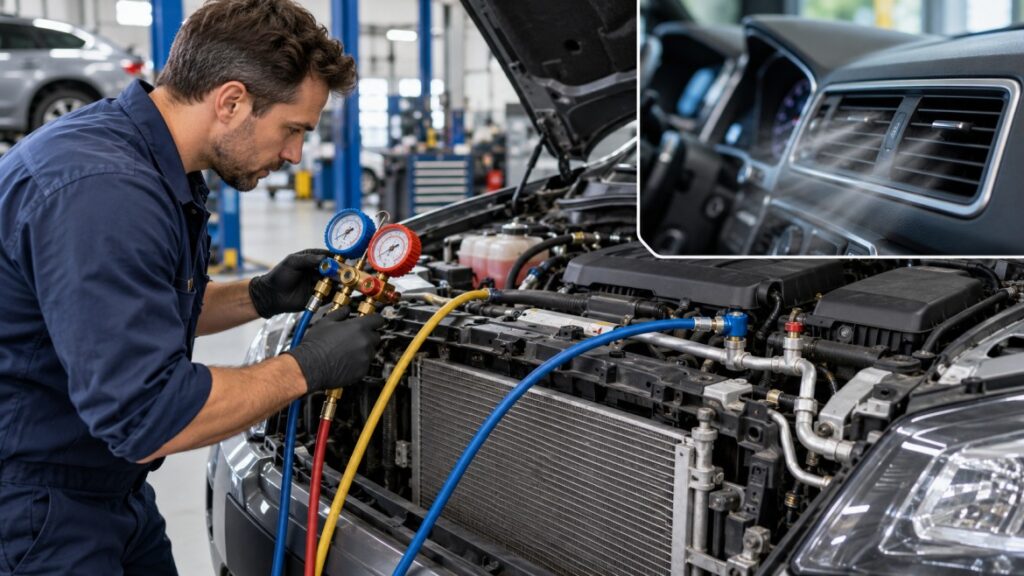
Driving around Melbourne during summer can be uncomfortable when your car’s air conditioning stops delivering cool air. A properly functioning air conditioning system keeps the cabin comfortable, helps remove humidity and improves visibility by demisting the windows. However, several mechanical and electrical problems can affect its performance. Experienced mechanics in Somerton can inspect the system, identify the underlying issue and recommend suitable repairs. Whether your vehicle needs a routine car air conditioning service or more detailed diagnostics, understanding the common causes of poor cooling can help you recognise problems early and avoid unnecessary repairs.
1. Low Refrigerant Levels or Refrigerant Leaks
Refrigerant is an essential part of your car’s air conditioning system. It absorbs heat from inside the cabin and releases it outside, allowing cool air to circulate through the vents. When refrigerant levels become too low, the system cannot remove heat effectively.
One of the most common reasons for low refrigerant is a leak. Over time, seals, hoses and connections can deteriorate, allowing refrigerant to escape. Damage to the condenser or other air conditioning components can also cause leaks.
Common warning signs include:
- Air coming through the vents feels warmer than usual.
- Cooling performance gradually decreases.
- The system takes longer to cool the cabin.
- The air conditioner cycles on and off more frequently.
- Cooling improves temporarily before becoming weak again.
A low refrigerant level does not always mean the system simply needs a regas. If refrigerant has escaped, the source of the leak should be identified and repaired before the system is refilled.
A qualified automotive air conditioning technician can check system pressures, inspect components and use suitable leak detection equipment to locate the problem.
Ignoring a refrigerant leak may lead to further cooling problems and increased strain on other parts of the system.
2. Faulty Air Conditioning Compressor
The compressor plays a central role in the air conditioning system by circulating refrigerant through the cooling circuit. Without proper refrigerant circulation, the system cannot maintain the conditions needed to cool the cabin.
A compressor can develop problems due to wear, inadequate lubrication, electrical faults or internal mechanical damage. Some vehicles also use electronically controlled compressors, making accurate diagnostics particularly important.
Signs of a compressor problem may include:
- Air conditioning stops cooling suddenly.
- Unusual grinding or rattling sounds appear when the system operates.
- Cooling becomes inconsistent.
- The compressor fails to operate when cooling is requested.
- The air conditioning system stops working completely.
A faulty compressor does not always require immediate replacement. Sometimes, a damaged electrical connection, pressure sensor or control component prevents an otherwise functional compressor from operating correctly.
For vehicles requiring an Audi service, it is important to identify whether the cooling issue comes from the compressor itself or from the electronic controls responsible for managing its operation.
A proper inspection helps determine whether the compressor needs repair, replacement or attention to a related component.
Continuing to use an air conditioning system with a failing compressor may cause additional damage, particularly if internal components begin to deteriorate.
3. Blocked or Damaged Air Conditioning Condenser
The condenser is usually positioned near the front of the vehicle, where it can release heat from the refrigerant into the surrounding air.
As refrigerant passes through the condenser, heat is transferred away from the air conditioning system. If the condenser becomes blocked or damaged, this heat transfer process becomes less effective.
Road debris, dirt, insects and leaves can accumulate around the condenser. Its exposed position also makes it vulnerable to stone damage, corrosion and accidental impacts.
A condenser problem may cause:
- Weak cooling during hot weather.
- Cold air while driving but warmer air when stationary.
- Reduced cooling performance in heavy traffic.
- Higher refrigerant pressures.
- Cooling that becomes inconsistent as outside temperatures rise.
A condenser cooling problem can also be caused by a faulty radiator or condenser fan. When a vehicle is stationary, the fan helps move air across the condenser to release heat.
If the fan does not operate correctly, cooling performance may drop significantly while waiting at traffic lights.
During a BMW service, checking the condition of the condenser and associated cooling fans can help identify air conditioning issues that become noticeable during stop-start driving.
Cleaning minor external debris may improve airflow, but a leaking or badly damaged condenser usually requires replacement.
A professional inspection can establish whether the issue involves blocked airflow, a refrigerant leak or an electrical fault affecting the cooling fan.
4. Clogged Cabin Air Filter
A cabin air filter helps remove dust, pollen and other airborne particles before air enters the passenger compartment.
As the filter collects contaminants, it can gradually become blocked. A heavily clogged filter restricts airflow through the ventilation system, making the air conditioning feel less effective even when the refrigerant circuit is operating correctly.
This problem is particularly noticeable when the fan is running at a high speed but only a small amount of air comes through the vents.
Typical symptoms include:
- Weak airflow from the dashboard vents.
- A stale or musty smell inside the cabin.
- Increased dust around the ventilation outlets.
- Slow cabin cooling.
- Poor demisting performance.
Cabin filters are generally replaced as part of scheduled vehicle maintenance, although replacement intervals vary depending on the vehicle and driving conditions.
Cars frequently driven in dusty environments or heavy traffic may need more frequent inspections.
During a Mercedes Service, the cabin filter can be checked alongside the ventilation system to determine whether restricted airflow is contributing to poor cooling.
Replacing a blocked filter is often a straightforward maintenance task. However, if airflow remains weak after replacement, the blower motor, air ducts or ventilation controls may need further inspection.
A clean cabin filter supports better airflow and helps the air conditioning system distribute cooled air more effectively throughout the vehicle.
5. Faulty Cooling Fans or Electrical Components
Modern vehicle air conditioning systems rely on several electrical components working together.
Cooling fans, pressure sensors, temperature sensors, relays, wiring and control modules all contribute to how the system operates. A fault in any of these components may prevent the air conditioner from cooling properly.
For example, a faulty condenser fan can reduce cooling when the vehicle is stationary. A damaged pressure sensor may send incorrect information to the control unit, causing the system to limit or stop compressor operation.
Electrical problems can sometimes produce intermittent symptoms, making them difficult to identify without diagnostic equipment.
Common signs include:
- Air conditioning works sometimes but not consistently.
- Cold air becomes warm while idling.
- The compressor does not operate when requested.
- Cooling stops unexpectedly.
- Climate control settings do not respond correctly.
Some faults may also trigger diagnostic trouble codes stored in the vehicle’s electronic control modules.
A European vehicle specialist can use suitable diagnostic equipment to read relevant fault codes, examine live sensor readings and test electrical components.
However, a fault code alone does not always identify the exact failed part. Further testing is often required to confirm the cause before components are replaced.
Accurate electrical diagnostics help reduce unnecessary repairs and ensure the underlying problem is properly addressed.
6. Problems With the Evaporator or Expansion Valve
The evaporator is located inside the vehicle’s heating and ventilation housing, usually behind the dashboard.
As refrigerant passes through the evaporator, it absorbs heat from the surrounding air. The blower fan then pushes this cooled air through the ventilation system and into the cabin.
An expansion valve or another refrigerant metering device regulates the flow of refrigerant entering the evaporator.
If either component develops a problem, cooling efficiency can decrease.
An expansion valve may become restricted or fail to regulate refrigerant flow correctly. The evaporator may develop leaks, become contaminated or experience excessive icing under certain fault conditions.
Possible warning signs include:
- Air conditioning produces uneven temperatures.
- Cooling performance decreases after prolonged use.
- Airflow becomes weak as ice builds up on the evaporator.
- Unusual smells come from the ventilation system.
- Cooling performance changes unexpectedly.
Evaporator problems can be more complicated to repair because the component is often located deep inside the dashboard.
For customers arranging a Volvo service somerton, checking refrigerant pressures, temperature readings and ventilation performance can help determine whether an internal cooling component is contributing to the issue.
It is important to distinguish between evaporator faults and other problems that produce similar symptoms.
For example, a temperature sensor fault may cause evaporator icing even when the evaporator itself is functioning correctly.
Professional testing helps establish the appropriate repair approach and avoids unnecessary dashboard dismantling.
7. Faulty Blend Door Actuator or Climate Control System
The blend door controls how air moves through the vehicle’s heating and cooling system.
In many vehicles, it helps regulate cabin temperature by directing air through or around the heater core. An actuator, commonly controlled electronically, moves the blend door according to the selected temperature.
If the actuator fails or the blend door becomes stuck, warm air may enter the cabin even when the air conditioning system is producing cold air.
This can make it seem as though the refrigerant or compressor has failed when the actual problem is inside the climate control system.
Common symptoms include:
- Warm air from one vent and cold air from another.
- Different temperatures on the driver’s and passenger’s sides.
- Clicking noises behind the dashboard.
- Cabin temperature does not match the selected setting.
- Temperature changes unexpectedly.
Dual-zone and multi-zone climate control systems can have several actuators, allowing different areas of the cabin to maintain separate temperatures.
A fault affecting one actuator may cause cooling problems in only one section of the vehicle.
During a Volkswagen service, checking the climate control settings, actuator movement and stored fault codes can help determine whether the problem involves air distribution rather than refrigerant circulation.
Some actuator problems can be corrected through recalibration, while others require replacement of a damaged component.
Correctly identifying the fault prevents unnecessary refrigerant regassing or compressor replacement when the air conditioning circuit is operating normally.
How to Tell When Your Car Air Conditioning Needs Professional Attention
Air conditioning problems often begin with small changes in performance. Recognising these signs can help prevent a minor issue from developing into a more expensive repair.
Pay attention when the system takes longer than usual to cool the cabin, struggles during hot weather or produces different temperatures from individual vents.
Unusual noises, unpleasant smells and frequent changes between warm and cold air can also indicate a developing problem.
A simple observation can help your mechanic narrow down the possible causes. For example, note whether the air conditioner works better while driving or whether cooling becomes weaker after the vehicle has been running for some time.
Avoid repeatedly switching the system on if it produces grinding noises or other signs of mechanical damage.
Refrigerant should not be released into the atmosphere or handled without the appropriate qualifications and equipment. Professional diagnosis is particularly important because different vehicles use different refrigerants and air conditioning configurations.
Regular maintenance can also help identify deteriorating components before cooling performance becomes severely affected.
Can Other Vehicle Problems Affect Air Conditioning Performance?
Air conditioning performance is closely connected to other vehicle systems.
A cooling system fault, electrical issue or engine overheating problem may cause the vehicle to reduce air conditioning operation to protect mechanical components.
Some vehicles temporarily limit compressor operation during certain operating conditions, such as heavy engine loads or unusually high temperatures.
A failing battery, alternator or electrical connection can also interfere with electronically controlled components.
Vehicles requiring dsg transmission repairs Melbourne may experience separate transmission symptoms, such as hesitation, shuddering or gear selection problems. These symptoms should not automatically be linked to an air conditioning fault.
However, when several warning lights or performance problems appear together, a broader vehicle diagnostic inspection may be appropriate.
Similarly, a roadworthy certificate inspection in Victoria does not normally involve a comprehensive assessment of cabin air conditioning cooling performance. Owners should arrange a separate air conditioning inspection if they are concerned about how well the system operates.
Understanding the difference between routine vehicle inspections and specialised air conditioning diagnostics helps owners choose the correct service for their needs.
Simple Ways to Maintain Your Car Air Conditioning
Preventative maintenance can help keep your vehicle’s air conditioning system working efficiently, especially during Melbourne’s warmer months.
Running the air conditioning periodically, including during cooler weather, allows you to monitor performance and may help maintain refrigerant circulation and component lubrication.
Keeping the cabin air filter clean is another important step. A blocked filter can restrict airflow and reduce comfort even when the cooling system is functioning correctly.
It is also useful to remove leaves and visible debris from accessible external air intake areas. Avoid using high-pressure water or sharp tools around the condenser, as its fins and refrigerant tubes can be easily damaged.
If the system begins blowing warm air, resist the temptation to add refrigerant without first identifying the problem. Incorrect refrigerant quantities can reduce cooling efficiency and may damage components.
Regular inspections are particularly useful for older vehicles or cars that have previously experienced refrigerant leaks, compressor faults or electrical problems.
A qualified technician can check cooling performance, inspect accessible components and recommend maintenance based on the vehicle manufacturer’s requirements.
Maintaining the system does not guarantee that faults will never occur, but it can help reduce unexpected breakdowns and keep the cabin comfortable throughout the year.
Restore Your Car’s Air Conditioning With European Prestige Car Care
Poor air conditioning performance can result from refrigerant leaks, compressor problems, blocked filters, condenser damage or electrical faults. Identifying the actual cause is essential before choosing a repair.
At European Prestige Car Care, we provide automotive servicing and diagnostics for European vehicles in Somerton and surrounding Melbourne suburbs. Our technicians can assess cooling concerns, explain the findings and recommend suitable repair options based on the condition of your vehicle.
Whether your air conditioner has stopped cooling completely or is gradually losing performance, arranging an inspection can help restore comfort and prevent further issues.
Contact European Prestige Car Care today on 1800 001 105 to discuss your vehicle’s air conditioning problem or book an inspection at our Somerton workshop.
; ?>)
; ?>)
; ?>)
; ?>)
; ?>)
; ?>)
; ?>)
; ?>)