
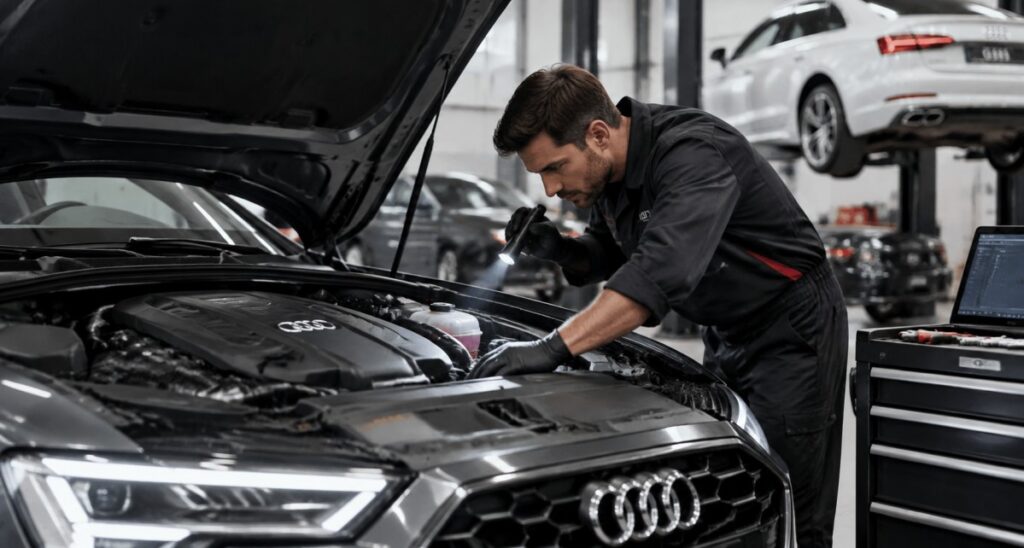
European vehicles combine advanced technology, precise engineering and refined performance. These qualities make them enjoyable to drive, but they also mean unusual symptoms should be checked properly rather than ignored. At European Prestige Car Care, an experienced European Car Specialist can inspect developing faults, carry out accurate diagnostics and recommend the right maintenance before a small issue becomes a larger repair.
Modern European cars rely on complex engines, transmissions, electronics, safety systems and sensors that all work together. A new noise, warning light or change in the way the vehicle drives can sometimes be an early sign that something needs attention.
Recognising these signs early can help protect performance, safety and long-term reliability.
1. Dashboard Warning Lights Keep Appearing
Dashboard warning lights are designed to alert drivers when the vehicle detects a fault or unusual condition. Some lights relate to routine maintenance, while others may indicate problems with the engine, transmission, brakes, emissions, battery or cooling system.
A warning light that remains on after the vehicle starts should be checked. The same applies when a warning appears occasionally and then disappears.
Common warning lights include:
- Check engine light
- Brake warning light
- ABS warning
- Battery warning
- Coolant temperature warning
- Oil pressure warning
- Transmission warning
- Tyre pressure warning
Modern European vehicles often store diagnostic fault codes when a system detects a problem. These codes can help a trained technician identify where the issue may be coming from.
A proper diagnosis should combine electronic testing with a physical inspection. Replacing parts without understanding the cause can lead to unnecessary costs.
2. The Car Feels Different to Drive
Drivers usually become familiar with how their vehicle accelerates, turns, brakes and changes gear. A noticeable change in this behaviour can be one of the clearest signs that something needs checking.
The car may begin to hesitate during acceleration, feel less responsive, vibrate through the steering wheel or pull to one side.
Other changes may include:
- Rough idling
- Slower acceleration
- Poor fuel economy
- Heavy steering
- Reduced braking response
- Uneven handling
- Unusual gear changes
A performance change does not always mean there is a serious fault. It can be caused by anything from worn tyres and suspension components to engine sensors or fuel delivery issues.
Routine Audi Service can help identify developing issues before they affect driving quality or reliability.
Early inspection gives technicians the chance to find the cause while the symptoms are still relatively easy to diagnose.
3. New Noises, Smells or Vibrations Develop
European cars are generally designed to provide a smooth and quiet driving experience. New noises or vibrations should therefore be taken seriously, especially when they appear suddenly.
A clunking sound over bumps may indicate suspension wear. Grinding while braking may point to worn brake components. Whining or knocking during gear changes may suggest a transmission issue.
Common noises to monitor include:
- Grinding
- Clicking
- Knocking
- Rattling
- Squealing
- Whining
- Clunking
Unusual smells can also provide important clues.
A burning smell may indicate overheated components, fluid leaks or electrical faults. A sweet smell can be related to coolant, while strong exhaust fumes may point to an exhaust or emissions issue.
Vibrations during braking, acceleration or higher speeds can also be linked to different vehicle systems.
Regular BMW service can help identify wear in suspension, braking and engine components before it develops into a larger problem.
4. Gear Changes Become Rough or Delayed
Many European vehicles use advanced automatic or dual-clutch transmissions. These systems are designed to provide smooth and responsive gear changes, but they need regular maintenance.
Transmission problems may begin with subtle symptoms.
Drivers may notice:
- Jerking during gear changes
- Delayed engagement
- Shuddering when moving off
- Slipping between gears
- Warning messages
- Unusual transmission noises
Some faults may relate to transmission fluid, while others can involve sensors, clutches, control modules or mechatronic systems.
Ignoring early symptoms can lead to more extensive repairs later.
Vehicles that spend a lot of time in stop-start Melbourne traffic can place extra demand on transmission components.
A scheduled Volkswagen Service is particularly important for models fitted with DSG systems, where correct maintenance intervals can help support smoother transmission performance.
Keep Small Problems From Becoming Major Repairs
Changes in performance, warning lights and unusual noises are easier to manage when they are investigated early. Diagnostic testing and a proper inspection can help determine whether the vehicle needs adjustment, servicing or repair.
5. Fluid Leaks, Overheating or Higher Fuel Use Appear
Fluids play a critical role in the operation of the engine, transmission, brakes and cooling system.
A visible fluid leak under the car should not be ignored.
Depending on the colour and location, it could be:
- Engine oil
- Coolant
- Transmission fluid
- Brake fluid
- Power steering fluid on applicable models
Low fluid levels can lead to serious problems.
Low engine oil may increase internal wear. A coolant leak can lead to overheating. Brake fluid loss can affect safety.
Overheating should always be addressed quickly. A rising temperature gauge, steam from the engine bay or a coolant warning can indicate a cooling system issue.
Cooling faults may involve the thermostat, radiator, water pump, cooling fan or hoses.
A scheduled Mercedes Service can help identify these issues during routine inspection before they develop into more expensive faults.
Fuel consumption is another useful indicator. A noticeable increase may relate to tyre pressure, engine sensors, ignition performance, air intake problems or fuel delivery issues.
Different European Brands Need Different Maintenance
European vehicles are not all built the same.
Each manufacturer uses different engines, transmissions, electronic systems and service schedules. Even two vehicles from the same brand may have different maintenance requirements depending on the engine, model and year.
Following the correct service schedule is important because manufacturer recommendations are based on the design and operating requirements of the vehicle.
A professional Volvo Service Somerton should take into account the model, kilometres travelled, service history and current vehicle condition.
Using the correct fluids, filters and replacement parts also matters. European vehicles often require specific products that meet manufacturer standards.
Why Early Diagnosis Can Save Money
Small problems often become more expensive when they are left untreated.
A worn suspension bush can affect tyre wear. A minor coolant leak can eventually lead to overheating. Worn brake pads can damage discs. A weak battery can cause starting and electrical problems.
Regular inspections allow these issues to be identified earlier.
This can make repairs easier to plan and reduce the chance of an unexpected breakdown.
Early diagnosis also helps avoid replacing parts unnecessarily. A proper technician should inspect the vehicle, review diagnostic information and confirm the actual cause before recommending repairs.
Specialist Knowledge Matters
European cars contain increasingly advanced technology.
Turbocharged engines, electronic steering systems, adaptive safety features, sophisticated transmissions and integrated control modules require the right knowledge and equipment.
An experienced European vehicle specialist should understand how these systems interact and how to diagnose them correctly.
This is especially important when a problem is intermittent.
A warning light may appear only under certain driving conditions, while a transmission issue may happen only when the vehicle is warm.
Accurate diagnosis requires more than reading a fault code. It should include inspection, testing and consideration of the symptoms reported by the driver.
Preventative Servicing Is Still Important
Drivers should not wait for a warning sign before arranging maintenance.
Regular servicing helps maintain engine lubrication, braking performance, cooling efficiency, transmission health and battery condition.
It also provides a chance to identify developing wear before it becomes noticeable while driving.
Service intervals vary between vehicles, so the manufacturer’s recommendations should always be followed.
Driving conditions, kilometres travelled, vehicle age and previous maintenance can also affect how often a car should be checked.
Keeping a complete service record is useful too. It helps provide a clear maintenance history and may support resale value later.
Give Your European Car the Attention It Needs
Dashboard warnings, unusual noises, changes in performance, rough gear shifts and fluid-related problems are all signs worth investigating.
Acting early can help protect your vehicle from further damage and reduce the risk of unexpected repair costs.
European Prestige Car Care provides specialist diagnostics, servicing and repairs for European vehicles from its Somerton workshop.
Call 1800 001 105 today to book your inspection or service and keep your European car performing safely and reliably.
; ?>)
; ?>)
; ?>)
; ?>)
; ?>)
; ?>)
; ?>)
; ?>)